Global Flavors Japanese Teriyaki Salmon
Highlighted under: Cuisine Explorer
When I first discovered how to make teriyaki salmon at home, I couldn’t believe how easy it was to bring those incredible Japanese flavors to my kitchen. This dish features tender fillets of salmon glazed with a rich teriyaki sauce that balances sweetness and savory notes beautifully. I love serving it over steamed rice with a sprinkle of sesame seeds, bringing a delightful touch of umami to every bite. With just a handful of ingredients and a quick cook time, this recipe is perfect for busy weeknights or impressing guests on special occasions.
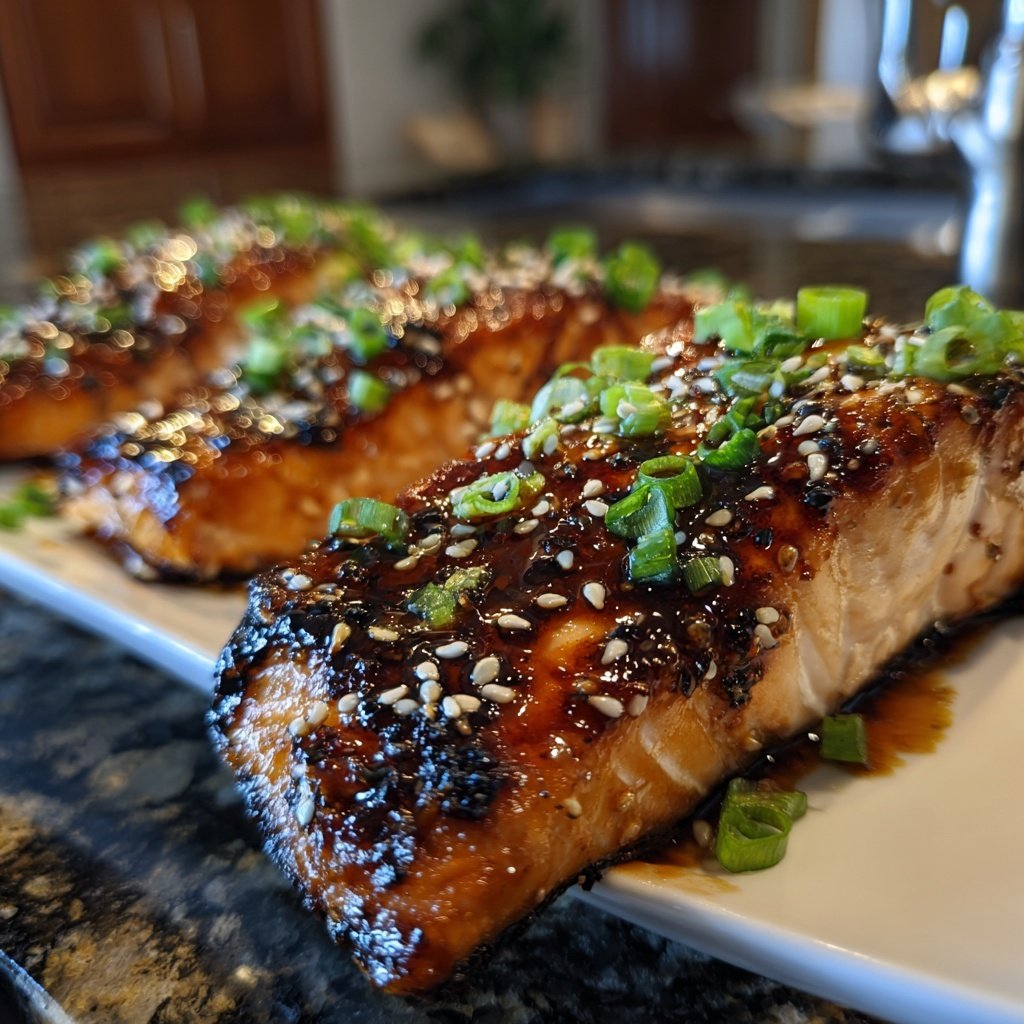
My journey into making teriyaki salmon started when I visited a quaint Japanese restaurant. The combination of the flaky salmon and the sweet-savory glaze was unforgettable, prompting me to recreate that dish at home. I tried several variations before landing on the perfect balance of soy sauce, mirin, and honey that not only enhances the salmon's natural flavor but also caramelizes beautifully when cooked.
To take this recipe a notch higher, I recommend marinating the salmon for at least 15 minutes before cooking. This allows the fish to absorb those wonderful flavors, and you'll end up with a dish that tastes just as good as what you’d find in your favorite sushi bar. The glaze can also be adjusted to your personal liking, so feel free to add a bit more honey or even some chili flakes for a touch of heat!
What You'll Love About This Recipe
- Juicy salmon infused with a classic sweet teriyaki flavor
- Quick and easy preparation without sacrificing taste
- Versatile dish that pairs well with rice, vegetables, or noodles
Understanding Teriyaki Sauce
The teriyaki sauce is the heart of this dish, providing a sweet and savory glaze that elevates the salmon. Soy sauce contributes a deep umami flavor, while mirin adds a subtle sweetness and complexity. Honey not only enhances the sweetness but also helps to caramelize the sauce during cooking, creating a delightful gloss on the salmon. Adjusting the balance of these ingredients allows you to customize the sauce to your taste, whether you prefer it sweeter or with a more pronounced soy flavor.
Incorporating garlic and ginger brings fresh notes to the sauce and helps to cut through the richness of the salmon. Be sure to use fresh ginger for the best flavor; the vibrant zest it adds truly transforms the dish. If you're short on time, feel free to substitute garlic powder and ground ginger, but the depth of fresh aromatics will make a significant difference that I highly recommend.
Perfecting Salmon Cooking Techniques
When cooking the salmon, medium heat is crucial to achieve that perfect, flaky texture without burning the skin. If your skillet is too hot, the skin may char before the flesh cooks through. A good trick is to look for visual cues; the salmon should change from deep pink to a lighter pink as it cooks, and when it’s ready to flip, it should release easily from the pan. Approximately 4-5 minutes per side will yield a beautifully cooked fillet, but be vigilant as cooking times can vary based on thickness.
If you like your salmon a little less done, you can remove it slightly earlier and allow the residual heat to finish cooking—it will continue to cook after being removed from the heat. Also, don’t forget to let the salmon rest for a minute before serving; this allows the juices to redistribute, making every bite more tender and juicy.
Serving Suggestions and Variations
Serving teriyaki salmon over steamed rice is a classic choice, but feel free to get creative! This dish pairs wonderfully with sautéed vegetables like bok choy or bell peppers, adding both color and crunch. For a lighter option, serve it over a bed of mixed greens tossed with sesame dressing. You can also swap out the garnish—try crushed peanuts or chopped cilantro for an unexpected twist that complements the teriyaki flavors wonderfully.
If you’re interested in variations, consider adding a splash of orange juice or a sprinkle of red pepper flakes to the marinade for an interesting citrusy kick or a touch of heat. You can also experiment with different proteins like chicken or tofu, adjusting the cooking times appropriately—chicken should be cooked until it reaches 165°F, while tofu would only require a few minutes to warm through.
Ingredients
Gather the following ingredients to make your teriyaki salmon.
Ingredients
- 2 salmon fillets
- 1/4 cup soy sauce
- 2 tablespoons mirin
- 1 tablespoon honey
- 1 tablespoon sesame oil
- 1 clove garlic, minced
- 1 teaspoon fresh ginger, grated
- Sesame seeds and green onions for garnish
Have all your ingredients prepped for a smooth cooking experience!
Instructions
Follow these simple steps to create your teriyaki salmon.
Make the Teriyaki Sauce
In a small bowl, whisk together the soy sauce, mirin, honey, sesame oil, garlic, and ginger until well combined.
Marinate the Salmon
Place the salmon in a shallow dish and pour the teriyaki sauce over the top. Let it marinate for at least 15 minutes.
Cook the Salmon
Heat a skillet over medium heat and add the marinated salmon, reserving extra marinade. Cook for 4-5 minutes on each side until the salmon is cooked through and the skin is crispy.
Add the Sauce
During the last minute of cooking, pour the reserved marinade over the salmon and cook until it thickens slightly.
Serve
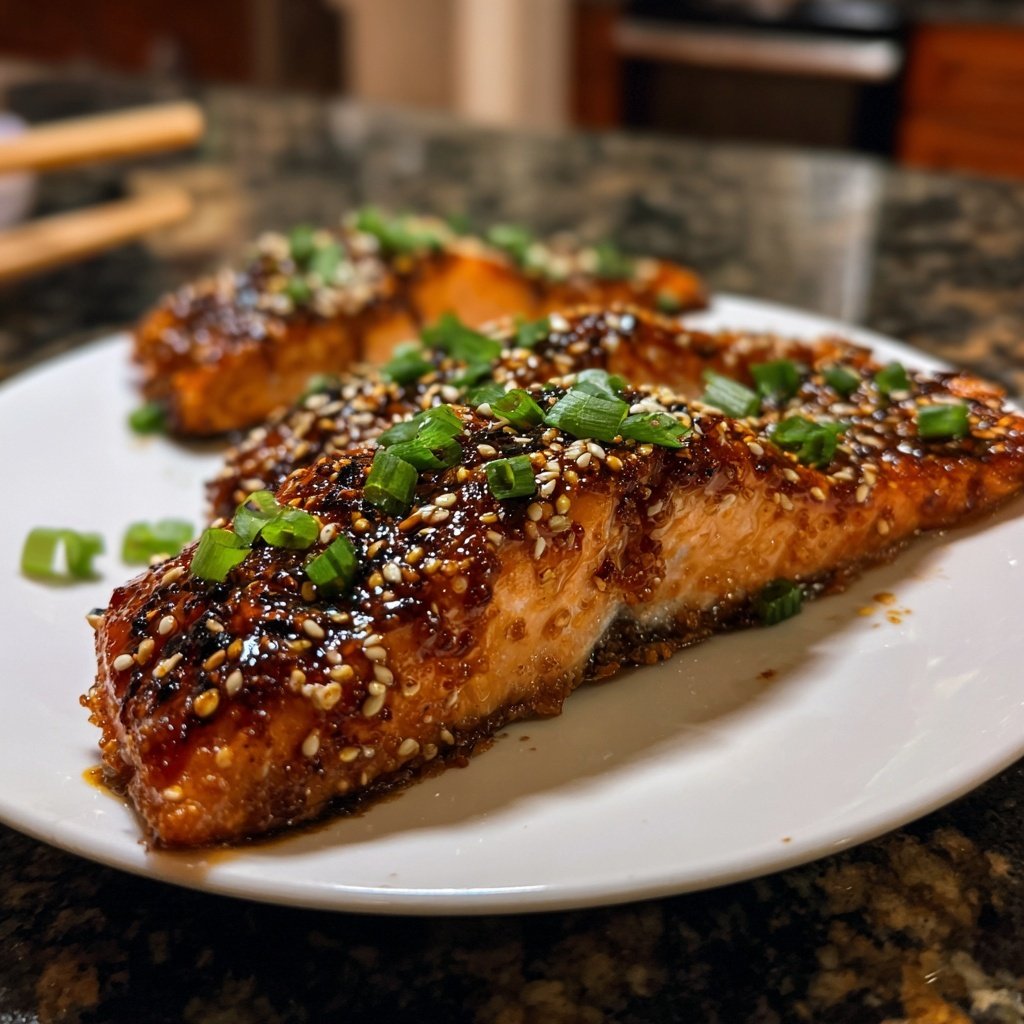
Transfer the salmon to a plate, garnish with sesame seeds and chopped green onions, and serve immediately.
Enjoy your delicious homemade teriyaki salmon!
Pro Tips
- For extra flavor, try adding a splash of rice vinegar to the marinade. You can also substitute the salmon for chicken breast or tofu for a variation on this classic recipe.
Making It Ahead of Time
This teriyaki salmon recipe is great for meal prep! You can marinate the salmon fillets in the teriyaki sauce up to 24 hours in advance, which not only saves time but also enhances the flavor as the salmon absorbs the marinade. Store the marinated salmon in an airtight container in the fridge, and it will be ready to cook when you need it. If you have extra teriyaki sauce, it can easily be stored in a sealed container in the refrigerator for up to a week.
When it comes to leftover salmon, simply store it in an airtight container in the fridge, and it should be good for 2-3 days. You can enjoy it cold in salads or quickly reheat it in a skillet over low heat. Be careful not to overheat, as this could dry out the fish; just warm enough to take the chill off is ideal.
Troubleshooting Common Issues
If your salmon fillets stick to the pan, it might not be hot enough when you place them in. Make sure to preheat your skillet properly and use enough sesame oil to create a nonstick surface. If you do encounter sticking, allow the salmon some time to develop a crust and release naturally before attempting to flip it.
Should you find that your teriyaki sauce doesn't thicken as expected during the last minute of cooking, you can create a quick cornstarch slurry by mixing 1 teaspoon of cornstarch with a tablespoon of water and adding it to the pan. This will help achieve that desirable glossy, thicker sauce.
Ingredient Swaps and Alternatives
If you're out of mirin, you can substitute it with a mixture of white wine and a bit of sugar to mimic its sweetness and acidity. Alternatively, rice vinegar mixed with a bit of sugar can work in a pinch. For those following a gluten-free diet, use tamari instead of soy sauce for all the deep flavor you need without the gluten.
For a twist on the traditional, try adding pineapple juice to the marinade for a tropical flavor profile or swapping in maple syrup for honey if you’re looking for a vegan alternative. These small changes can lead to exciting new flavor experiences with this simple recipe.
Questions About Recipes
→ Can I use frozen salmon for this recipe?
Yes, but ensure it's fully thawed before marinating and cooking for the best texture.
→ What if I don't have mirin?
You can substitute with a mix of sake and sugar, or use a bit of white wine vinegar mixed with honey.
→ How do I store leftovers?
Store cooked salmon in an airtight container in the refrigerator for up to 2 days.
→ Can I make the teriyaki sauce ahead of time?
Absolutely! You can prepare the sauce in advance and store it in the refrigerator for up to a week.
Global Flavors Japanese Teriyaki Salmon
Created by: Lacey Montgomery
Recipe Type: Cuisine Explorer
Skill Level: Beginner
Final Quantity: 2 servings
What You'll Need
Ingredients
- 2 salmon fillets
- 1/4 cup soy sauce
- 2 tablespoons mirin
- 1 tablespoon honey
- 1 tablespoon sesame oil
- 1 clove garlic, minced
- 1 teaspoon fresh ginger, grated
- Sesame seeds and green onions for garnish
How-To Steps
In a small bowl, whisk together the soy sauce, mirin, honey, sesame oil, garlic, and ginger until well combined.
Place the salmon in a shallow dish and pour the teriyaki sauce over the top. Let it marinate for at least 15 minutes.
Heat a skillet over medium heat and add the marinated salmon, reserving extra marinade. Cook for 4-5 minutes on each side until the salmon is cooked through and the skin is crispy.
During the last minute of cooking, pour the reserved marinade over the salmon and cook until it thickens slightly.
Transfer the salmon to a plate, garnish with sesame seeds and chopped green onions, and serve immediately.
Extra Tips
- For extra flavor, try adding a splash of rice vinegar to the marinade. You can also substitute the salmon for chicken breast or tofu for a variation on this classic recipe.
Nutritional Breakdown (Per Serving)
- Calories: 380 kcal
- Total Fat: 26g
- Saturated Fat: 15g
- Cholesterol: 195mg
- Sodium: 85mg
- Total Carbohydrates: 32g
- Dietary Fiber: 3g
- Sugars: 24g
- Protein: 6g